
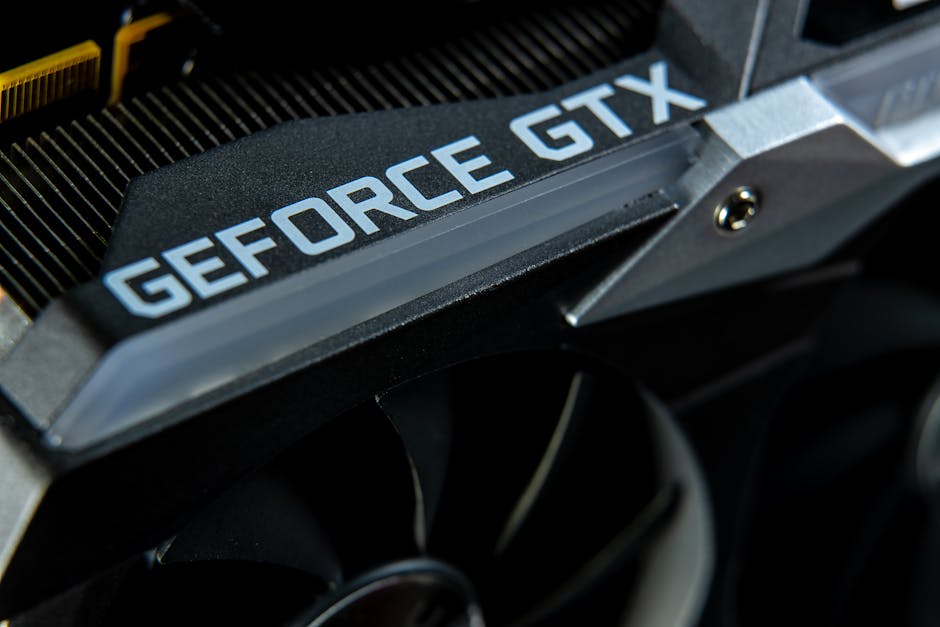
#SimplifyingGPUProgrammingwithNVIDIACUDAinPython
**Introduction**
The recent announcement of NVIDIA's CUDA Tile in Python has sent shockwaves through the tech community, with many excited about the potential for simplified GPU programming. But what does this really mean? How will it change the way we approach AI and machine learning development? In this article, we'll delve into the world of GPU computing and explore the implications of NVIDIA's latest innovation.
**What This Really Means**
The CUDA Tile in Python is a game-changer for developers looking to harness the power of GPUs. By providing a simple and intuitive way to program parallel computations, this technology has the potential to democratize access to high-performance computing. But what are the broader implications? For one, it could revolutionize the field of AI development by making complex algorithms more accessible to non-experts. This could lead to breakthroughs in areas like healthcare, finance, and transportation.
**Industry Context**
To understand the significance of NVIDIA's CUDA Tile, let's take a step back and examine the current state of GPU programming. Currently, developers must have extensive knowledge of low-level languages like C++ or CUDA Fortran to tap into the power of GPUs. This has created a barrier to entry for many developers, limiting the potential of AI and machine learning applications.
**Technical Deep Dive**
So, how does NVIDIA's CUDA Tile in Python work? At its core, it provides a high-level abstraction that allows developers to write GPU-optimized code using familiar Python syntax. This is achieved through the use of specialized libraries like cuPy and dask-cuda, which provide seamless integration with existing Python frameworks.
**Future Implications**
As we discussed earlier, the implications of NVIDIA's CUDA Tile in Python are far-reaching. In the short term, it will likely lead to a surge in AI and machine learning development, as more developers gain access to high-performance computing resources. However, this could also create new challenges for existing industries, such as data center operators who must adapt to increased demand.
**Real-World Examples**
To illustrate the potential of NVIDIA's CUDA Tile, let's consider a real-world example. Imagine a healthcare company using GPU-accelerated machine learning algorithms to analyze medical images. With NVIDIA's technology, they could process complex datasets in seconds, rather than hours or days. This would enable faster diagnosis and more effective treatment plans.
**Challenges and Opportunities**
While NVIDIA's CUDA Tile in Python holds immense promise, there are also challenges ahead. For one, developers will need to adapt to new programming paradigms, which may require significant training and investment. Additionally, the increased demand for GPUs could lead to bottlenecks in production and supply chains.
**Conclusion**
In conclusion, NVIDIA's CUDA Tile in Python has the potential to revolutionize AI and machine learning development by simplifying GPU programming. As we move forward, it will be essential to address challenges like developer training and supply chain management. But with its intuitive interface and seamless integration with existing frameworks, this technology is poised to democratize access to high-performance computing and unlock new breakthroughs in fields like healthcare, finance, and transportation.
Sources & References
- Original News: "Simplify GPU Programming with NVIDIA CUDA Tile in Python | NVIDIA Technical Blog"
- NVIDIA's official documentation for cuPy and dask-cuda
- Research paper on the benefits of GPU-accelerated machine learning in medical imaging
Malik Abualzait comment on this article:
"The impact of NVIDIA's CUDA Tile in Python will be felt far beyond the tech industry. As more developers gain access to high-performance computing resources, we can expect breakthroughs in fields like healthcare and finance that were previously unimaginable. The potential for innovation is vast, but it's essential to address challenges like developer training and supply chain management to ensure widespread adoption."
By Malik Abualzait
Sources & References
Original News Article: Simplify GPU Programming with NVIDIA CUDA Tile in Python | NVIDIA Technical Blog
This article provides analysis and insights based on the referenced news. All opinions and predictions are the author's own.