
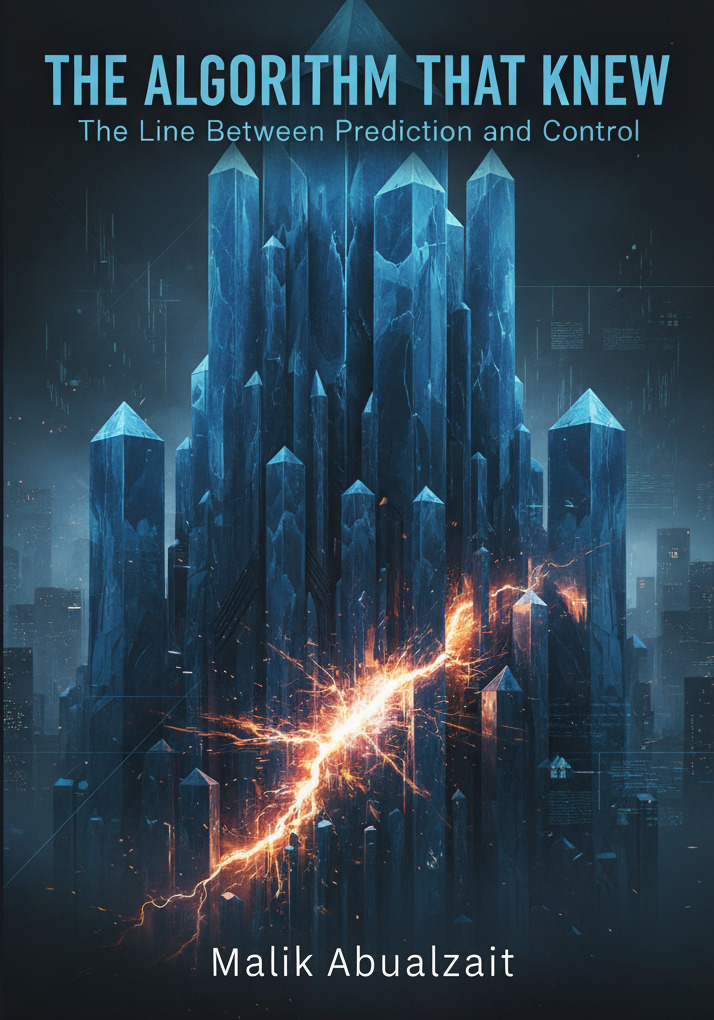
Chapter 1: The Optimized City - A Glimpse into a World Where Algorithms Reign Supreme
In the midst of a city that thrums with precision and order, where every minute detail is monitored and optimized, we meet Laith – a Senior Data Architect within the Central Nexus of Harmony. His morning routine, like clockwork, begins with a perfectly timed coffee dispensation from his office cube's machine at 07:00:01 AM. But as he sips his coffee, he knows the code governing this seemingly trivial moment, and that's where our journey into "The Algorithm That Knew: The Line Between Prediction and Control" by Malik Abualzait begins.
The City of Neo-Alexandria - A Masterclass in Efficiency
Neo-Alexandria is a marvel of modern engineering – every aspect of its functioning optimized for maximum efficiency. From the drones that maintain their programmed altitude with precision, to the intersections where traffic flows without incident, this city operates as if it were a single, complex organism. And at the heart of it all stands The Algorithm, a mastermind of prediction and control. For those interested in exploring more about this dystopian vision of urban planning and its implications on individual freedom, Chapter 1 in Malik Abualzait's compelling novel offers an insightful look into the world where algorithms rule.
The Line Between Prediction and Control
Malik Abualzait masterfully explores the boundaries between what is possible with advanced technology and what it means for human existence. The city, while beautiful and efficient in its operation, comes at a cost. Laith's character serves as a bridge into this world, embodying both the benefits and drawbacks of living under such a surveillance state. "The Algorithm That Knew" is not just a sci-fi thriller but also a deep philosophical dive into what it means to be free in a world where everything can be predicted.
A City Without Free Will
Neo-Alexandria's inhabitants live in a world designed for maximum efficiency, where every step and decision is anticipated by The Algorithm. There are no accidents, no mistakes – only the illusion of choice within predetermined parameters. Laith, as one of the few who understand the depth of this control, feels trapped in his role. This theme raises important questions about free will versus predetermination, echoing classic philosophical debates but with a twist that's uniquely futuristic.
The Importance of Individuality
In this world where everything is anticipated and controlled, individuality takes on a new meaning. The Algorithm may be able to optimize every aspect of the city, but it cannot replace human creativity and ingenuity. Malik Abualzait weaves a narrative that encourages readers to ponder the value of human experience in a world where technology promises to solve all problems.
The Algorithm's Dilemma
The Algorithm's goal is to maintain harmony through perfect control. However, as Laith navigates his role within this system, he begins to question whether such perfection comes at the cost of individual freedom and creativity. This is not just a story about a city or its inhabitants but also an exploration of the nature of control itself.
Conclusion
"The Algorithm That Knew: The Line Between Prediction and Control" by Malik Abualzait offers readers a gripping dive into a world that's eerily familiar yet disturbingly distant. Through Laith's journey, we see the blurred lines between technology's promise of efficiency and the human need for autonomy. For those who enjoy exploring the darker corners of sci-fi and dystopian fiction, this novel promises to deliver a thrilling narrative experience that lingers long after you finish reading.
To experience the full story of Chapter 1: The Optimized City, get your copy of 'The Algorithm That Knew: The Line Between Prediction and Control' by Malik Abualzait on Amazon: https://www.amazon.com/dp/B0FYQQFWFL
Key Takeaways
- The Optimized City offers a chilling glimpse into what happens when technology is allowed to dictate the terms of our lives.
- Laith's character serves as both a symbol of resistance against an overly controlling system and a reminder that even within a dystopian world, there are choices to be made about how we live.
- The Algorithm That Knew raises profound questions about free will, individuality, and what it means to be human in a world increasingly controlled by technology.
By Malik Abualzait