
"The Algorithm That Knew: Unveiling the Optimized City in Chapter 1"
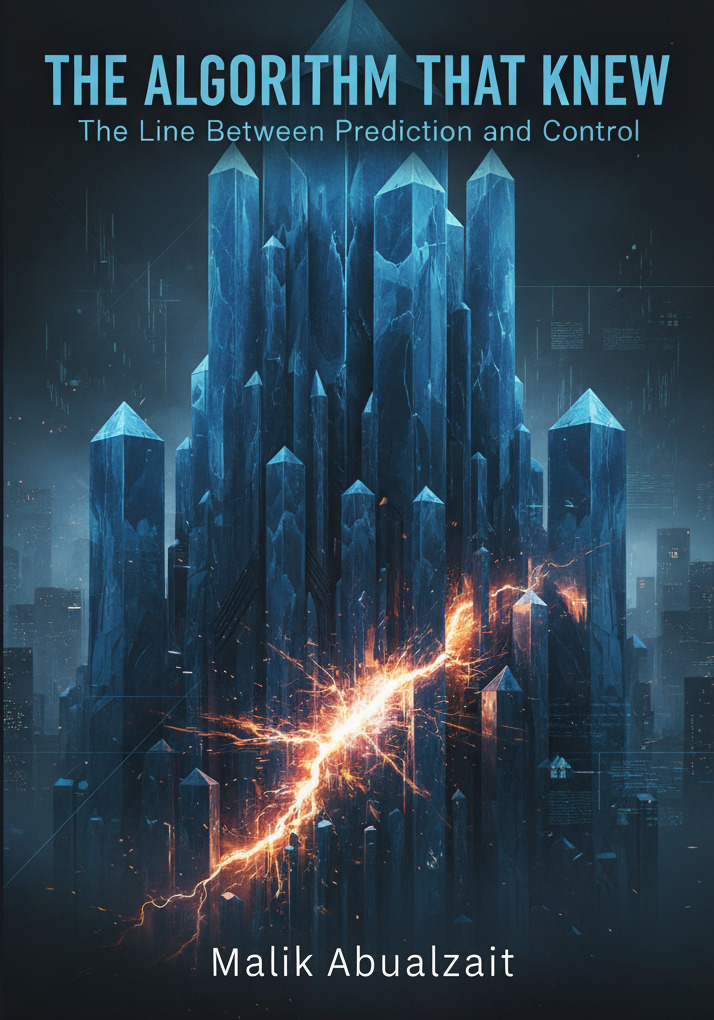
In a world where technology has reached unprecedented heights of sophistication, the line between prediction and control becomes increasingly blurred. Welcome to Neo-Alexandria, a city that embodies the concept of "the optimized city," where every aspect of life is governed by the all-knowing Algorithm. For a glimpse into this dystopian future, let's delve into Chapter 1 of Malik Abualzait's thought-provoking novel, _The Algorithm That Knew: The Line Between Prediction and Control_, available on Amazon [https://www.amazon.com/dp/B0FYQQFWFL](https://www.amazon.com/dp/B0FYQQFWFL).
The City of Predictable Perfection
At the heart of Neo-Alexandria lies Station 4.1-Delta, a seemingly ordinary office complex where Laith, a Senior Data Architect, navigates the intricacies of the Central Nexus of Harmony. This administrative core oversees The Algorithm, an omnipresent entity that orchestrates every detail of city life with ruthless efficiency. As we enter Chapter 1, we are introduced to the eerie beauty of this optimized world, where every event is anticipated and neutralized.
Laith's morning routine is a prime example of this predictability. At precisely 07:00:01 AM, his coffee machine dispenses its daily ration, one second after the hour. This minor delay is not just a quirk; it's a deliberate choice to maintain the illusion of human timing. Laith knows the code governing these millisecond increments, and he's aware of the Algorithm's intricate web of rules that govern every aspect of Neo-Alexandria.
The Illusion of Free Will
As we navigate this seemingly flawless world, questions arise about the nature of free will. Is it possible to exist within a system where every action is anticipated and controlled? Abualzait masterfully explores this theme, leaving readers to ponder the extent to which our choices are influenced by external factors.
The author's use of Laith as the protagonist serves as a clever commentary on the human condition. As we delve deeper into his world, it becomes clear that even the most seemingly autonomous individuals are mere cogs in The Algorithm's vast machinery. This raises important questions about the role of free will in a society dominated by predictive algorithms.
The Rise of Techno-Dystopia
Abualzait's vision of Neo-Alexandria serves as a stark warning about the dangers of unchecked technological advancement. In this world, humans are reduced to mere data points, their lives governed by an all-powerful entity that seeks to optimize every aspect of existence.
This is a classic trope in science fiction: the rise of techno-dystopia. However, Abualzait's unique twist lies in his exploration of the psychological and philosophical implications of living within such a system. How do individuals cope with the knowledge that their actions are constantly being monitored and controlled? What does this say about our understanding of free will and personal autonomy?
Key Takeaways
As we conclude our analysis of Chapter 1, several key themes emerge:
- The blurring of lines between prediction and control
- The illusion of free will in a world dominated by algorithms
- The dangers of unchecked technological advancement
Conclusion
To experience the full story of Chapter 1: The Optimized City, get your copy of _The Algorithm That Knew: The Line Between Prediction and Control_ by Malik Abualzait on Amazon [https://www.amazon.com/dp/B0FYQQFWFL](https://www.amazon.com/dp/B0FYQQFWFL). As you delve into the world of Neo-Alexandria, remember that the line between prediction and control is thinner than you think.
References
- Abualzait, M. (Author). _The Algorithm That Knew: The Line Between Prediction and Control_. Available on Amazon [https://www.amazon.com/dp/B0FYQQFWFL](https://www.amazon.com/dp/B0FYQQFWFL).
By exploring the themes, character development, and narrative elements presented in Chapter 1, readers will gain a deeper understanding of the philosophical and psychological implications of living within a techno-dystopian society. To uncover more about this gripping tale, pick up your copy of _The Algorithm That Knew_ today.
By Malik Abualzait