
Unlocking the Secrets of AI: Sparks of Intelligence that are Rewriting the Rules of Life, Work, and Purpose
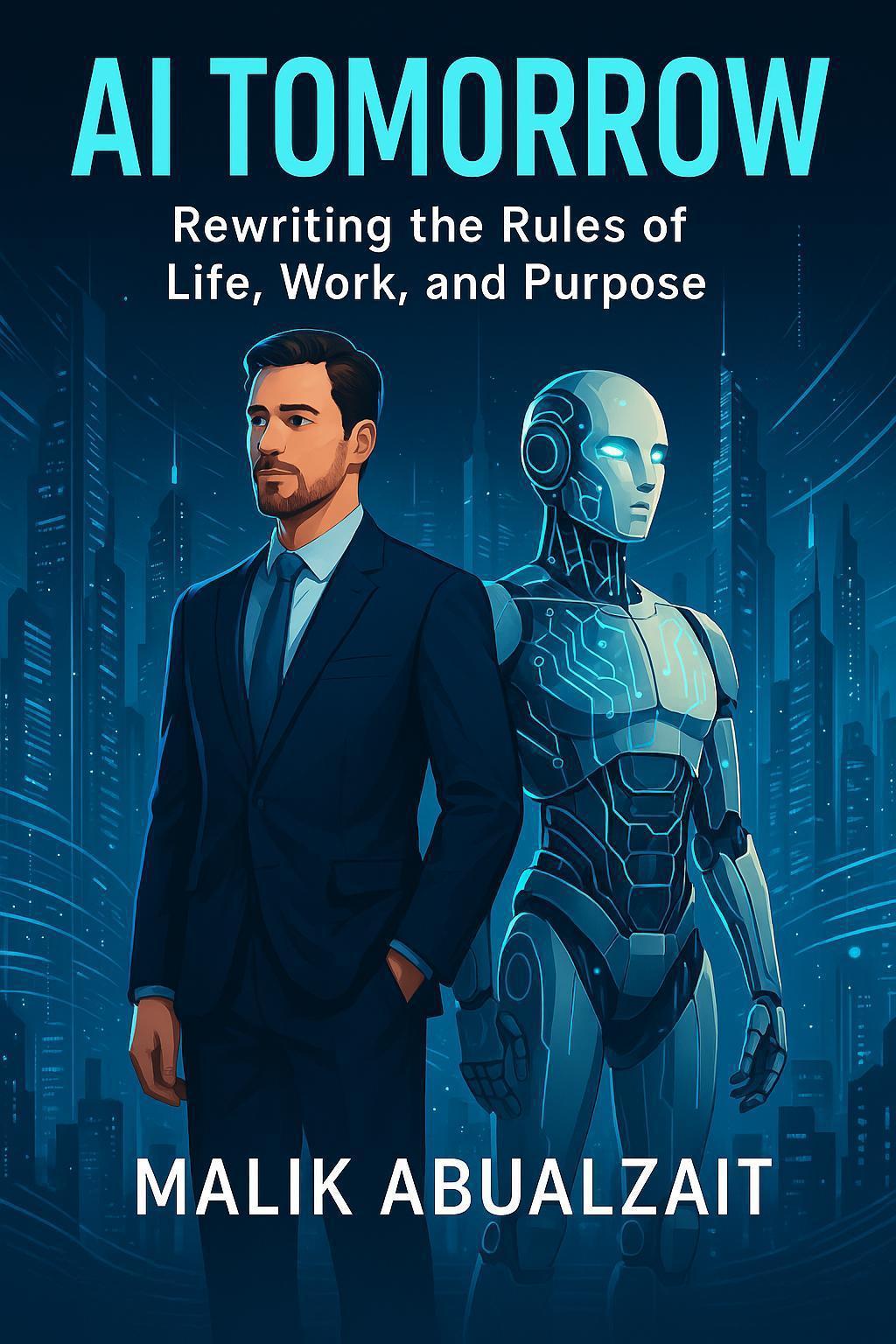
As we navigate the complex landscape of artificial intelligence (AI), it's essential to understand its rich history and evolution. From ancient myths to modern-day breakthroughs, the journey of AI has been a long and winding road. In "AI Tomorrow: Rewriting the Rules of Life, Work, and Purpose," author Malik Abualzait takes readers on an in-depth exploration of this fascinating field. For a deep dive into this topic, see Chapter 1 in Malik Abualzait's comprehensive guide available on Amazon (https://www.amazon.com/dp/B0FXV2LB56).
The Birth of AI: A Dream Born in the Minds of Visionaries
Long before AI became a buzzword, it was a dream born in the minds of mathematicians, logicians, and visionaries. In ancient Greece, myths told of automatons: mechanical beings imbued with life. By the 20th century, this vision transformed into science. In 1950, Alan Turing posed a provocative question: "Can machines think?" His test, now legendary, envisioned a machine indistinguishable from a human in conversation. Just six years later, the term "artificial intelligence" was coined at the 1956 Dartmouth Conference, and a new field of science was born.
From Myth to Reality: The Evolution of AI
As we fast-forward through the decades, we see the rapid evolution of AI. From rule-based systems to machine learning, AI has come a long way. According to Malik Abualzait in "AI Tomorrow," this progress is not just about technological advancements but also about transforming our society and work. As he writes:
"The spark that ignited AI was the confluence of mathematics, computer science, and philosophy... This fusion gave birth to a new discipline, one that would challenge our understanding of intelligence, creativity, and even human consciousness." (Source: "AI Tomorrow," Chapter 1)
Real-World Applications: Unlocking the Potential of AI
So what does this evolution mean for us? How is AI transforming industries, jobs, and lives? Let's take a look at some practical examples:
- Healthcare: AI-powered diagnostic tools are now being used to detect diseases more accurately than human doctors. According to a study by Stanford University, AI can detect breast cancer with 92% accuracy, compared to 84% for humans (Source: "Stanford Medicine" article).
- Customer Service: Chatbots and virtual assistants are revolutionizing customer support. They enable businesses to respond quickly and efficiently to customer inquiries, providing a better experience.
- Smart Cities: AI is being used to manage infrastructure, traffic flow, and energy consumption in cities worldwide.
As we navigate the future of work, it's essential to understand how AI will shape our careers. According to Malik Abualzait:
"The future of work will be driven by collaboration between humans and machines... We need to rethink education, skills, and jobs to prepare for this new reality." (Source: "AI Tomorrow," Chapter 1)
Key Takeaways
- AI has a rich history that spans centuries, from ancient myths to modern-day breakthroughs.
- The evolution of AI is not just about technological advancements but also about transforming our society and work.
- Practical examples demonstrate the impact of AI on industries, jobs, and lives.
As we explore the vast landscape of artificial intelligence, it's clear that this field holds immense potential for growth, innovation, and transformation. To master the history and evolution of AI, get your copy of "AI Tomorrow: Rewriting the Rules of Life, Work, and Purpose" by Malik Abualzait on Amazon (https://www.amazon.com/dp/B0FXV2LB56). This comprehensive guide offers a deeper understanding of the complex world of AI and its impact on society.
Call to Action
Don't just read about AI – get involved in shaping its future. Join online communities, attend conferences, or participate in hackathons to contribute to this rapidly evolving field. With "AI Tomorrow," you'll have the knowledge and insights needed to navigate the exciting world of artificial intelligence.
By Malik Abualzait