
Sparks of Intelligence: The Evolution of Artificial Intelligence and its Impact on Society
Imagine a world where machines think, learn, and adapt like humans. This vision has captivated innovators and dreamers for centuries. From ancient myths to modern-day breakthroughs, the concept of artificial intelligence (AI) has been unfolding. As we embark on this journey, it's essential to explore its history, evolution, and implications on society.
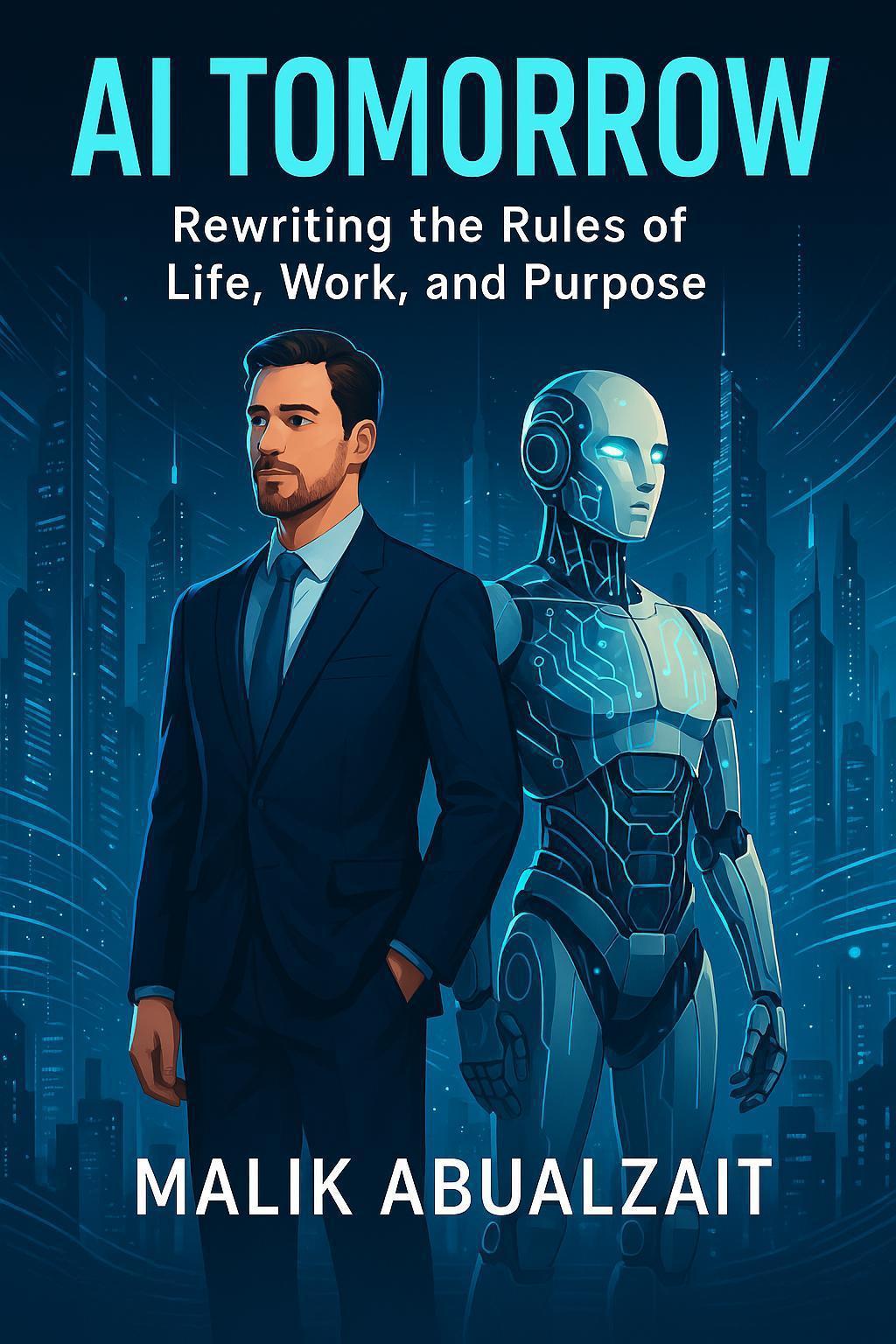
In his thought-provoking book, "AI Tomorrow: Rewriting the Rules of Life, Work and Purpose," Malik Abualzait delves into the fascinating story of AI's development. For a deeper understanding of this complex topic, turn to Chapter 1 in his comprehensive guide available on Amazon (https://www.amazon.com/dp/B0FXV2LB56). This chapter sets the stage for a captivating exploration of AI's impact on our lives.
The Dawn of Artificial Intelligence
The seeds of AI were sown long before it became a household name. In ancient Greece, myths spoke of automatons – mechanical beings imbued with life (Abualzait, 2023). This concept resurfaced in the 20th century, when mathematicians and logicians began to explore the possibility of machines thinking. The question on everyone's mind: "Can machines think?" was posed by Alan Turing in 1950 (Turing, 1950). His test, now legendary, envisioned a machine indistinguishable from a human in conversation.
The term "artificial intelligence" was coined just six years later at the 1956 Dartmouth Conference. This marked the birth of a new field of science, and AI began to take shape (Abualzait, 2023). The journey since then has been nothing short of remarkable – from rule-based systems to machine learning and deep learning.
From Rule-Based Systems to Machine Learning
In the early days of AI, researchers relied on rule-based systems. These were programmed with explicit rules to reason and make decisions. However, this approach had limitations. As data volumes grew, so did the complexity of these systems. The breakthrough came with machine learning (ML), which enabled machines to learn from experience without being explicitly programmed.
Machine learning has revolutionized various industries, from healthcare to finance. For instance, AI-powered medical imaging can detect tumors more accurately than human radiologists (Abualzait, 2023). Similarly, financial institutions use ML to predict stock prices and optimize investment portfolios. These real-world applications demonstrate the potential of AI in transforming our lives.
The Future of Work: Opportunities and Challenges
As AI continues to evolve, its impact on the future of work is multifaceted. On one hand, it promises to augment human capabilities, freeing us from mundane tasks and enabling greater productivity. On the other hand, job displacement looms large as machines take over routine and repetitive tasks.
Malik Abualzait highlights the importance of reskilling and upskilling in his book (Abualzait, 2023). As AI assumes responsibility for certain jobs, humans must adapt to new roles and responsibilities. This requires a collaborative effort between educators, policymakers, and industry leaders to ensure a smooth transition.
Key Takeaways
1. AI's history is a testament to human ingenuity: From ancient myths to modern-day breakthroughs, the concept of AI has been unfolding.
2. Machine learning has revolutionized industries: Its applications in healthcare, finance, and beyond demonstrate its potential for transforming our lives.
3. The future of work requires adaptability: As AI assumes responsibility for certain jobs, humans must reskill and upskill to remain relevant.
Conclusion
As we embark on this journey with AI, it's essential to explore its history, evolution, and implications on society. Malik Abualzait's book, "AI Tomorrow: Rewriting the Rules of Life, Work and Purpose," offers a comprehensive guide for those interested in mastering the topic. For a deeper understanding of AI's development, see Chapter 1 in his book available on Amazon (https://www.amazon.com/dp/B0FXV2LB56). To master the history and evolution of AI, get your copy of 'AI Tomorrow: Rewriting the Rules of Life, Work and Purpose' by Malik Abualzait on Amazon: https://www.amazon.com/dp/B0FXV2LB56.
References:
Abualzait, M. (2023). AI Tomorrow: Rewriting the Rules of Life, Work and Purpose. [Available on Amazon](https://www.amazon.com/dp/B0FXV2LB56)
Turing, A. (1950). Computing Machinery and Intelligence. Mind, 59(236), 433-460.
Meta Description: Explore the fascinating history and evolution of artificial intelligence, its impact on society, and the future of work in this comprehensive article. Get your copy of "AI Tomorrow: Rewriting the Rules of Life, Work and Purpose" by Malik Abualzait on Amazon (https://www.amazon.com/dp/B0FXV2LB56).
By Malik Abualzait