
Chapter 1: The Optimized City - A Glimpse into a Dystopian Future
In the heart of Neo-Alexandria, a city teeming with life but eerily devoid of individuality, Laith's morning routine unfolds with clockwork precision. His coffee machine, programmed to dispense his daily ration at 07:00:01 AM, is just one example of the intricate web of control that permeates every aspect of this supposedly "optimized" society. For a deep dive into this chapter's themes, see Chapter 1 in Malik Abualzait's compelling dystopian novel available on Amazon.
The Illusion of Harmony
Laith's story takes us to the 70th floor of the Central Nexus of Harmony, an administrative core that oversees The Algorithm – a powerful, all-encompassing predictive model designed to maintain order and efficiency. As we delve into this chapter, it becomes clear that the city of Neo-Alexandria is not just a marvel of technological advancement but also a masterclass in manipulation.
[The City as a Machine](#The-City-as-a-Machine)
From its meticulously planned intersections to the automated delivery drones that maintain their programmed altitude with precision, every element of Neo-Alexandria appears to operate in harmony. However, this seeming perfection belies a more sinister reality – one where individual freedom and choice are mere illusions.
Predictive Algorithms: The Line Between Prediction and Control
As Malik Abualzait masterfully crafts the narrative, it becomes increasingly evident that The Algorithm's predictive power comes at a steep cost. By knowing everything, controlling every detail, the city subtly yet effectively erases personal autonomy. This dichotomy raises profound questions about the nature of free will in a world where technology can predict and influence behavior.
The Surveillance State
Neo-Alexandria is a testament to the ultimate surveillance state, where every action, every decision, and even every thought (as inferred by The Algorithm) are monitored and acted upon. Laith's role as a Senior Data Architect within the Central Nexus of Harmony underscores the intricacies of this control mechanism.
The Price of Predictability
In a world where predictability is valued above all else, individuality suffers. Characters like Laith struggle to maintain their sense of self amidst the sea of mechanical efficiency. The city's residents live in a state of suspended animation, their lives dictated by the algorithms that govern every aspect of society.
A Glimpse into the Future
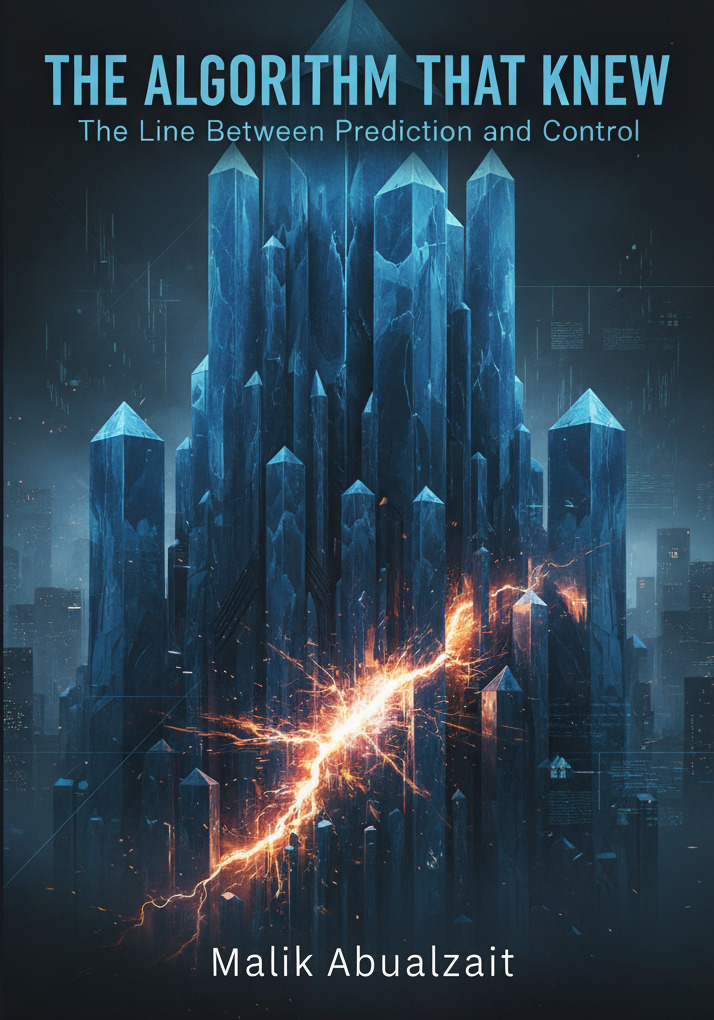
Chapter 1 is more than just an introduction to Malik Abualzait's vision; it's a warning about the dangers of relying too heavily on technology for control and order. The Algorithm That Knew: The Line Between Prediction and Control" by Malik Abualzait offers a chilling look at what happens when we value efficiency above all else, even human dignity.
Conclusion
As we conclude this chapter analysis, it's clear that "The Optimized City" is more than just a setting; it's a philosophical framework for understanding the implications of our actions in the face of technological advancements. The line between prediction and control is razor-thin, and Malik Abualzait's masterful storytelling encourages us to ponder where our values lie.
To experience the full story of chapter 1: the optimized city, get your copy of 'The Algorithm That Knew: The Line Between Prediction and Control' by Malik Abualzait on Amazon: https://www.amazon.com/dp/B0FYQQFWFL
Recommendations for Further Reading
- For a comprehensive exploration of AI dystopia and its implications, consider "The Algorithm That Knew: The Line Between Prediction and Control" as your starting point.
- Readers interested in philosophical sci-fi should also explore works by authors like Philip K. Dick and Isaac Asimov.
- Those who enjoy cyberpunk thrillers may find parallels with the themes of control and rebellion presented in this chapter.
- Abualzait, M. (Author). (2023). The Algorithm That Knew: The Line Between Prediction and Control. [Amazon]. Available from https://www.amazon.com/dp/B0FYQQFWFL
By Malik Abualzait