
The AI Revolution in Investing: A New Era of Precision
Imagine having a crystal ball that predicts market trends with uncanny accuracy, allowing you to make informed investment decisions with confidence. Sounds like science fiction? Think again. The integration of Artificial Intelligence (AI) into investing has revolutionized the way we approach the markets, making precision and predictability accessible to everyone.
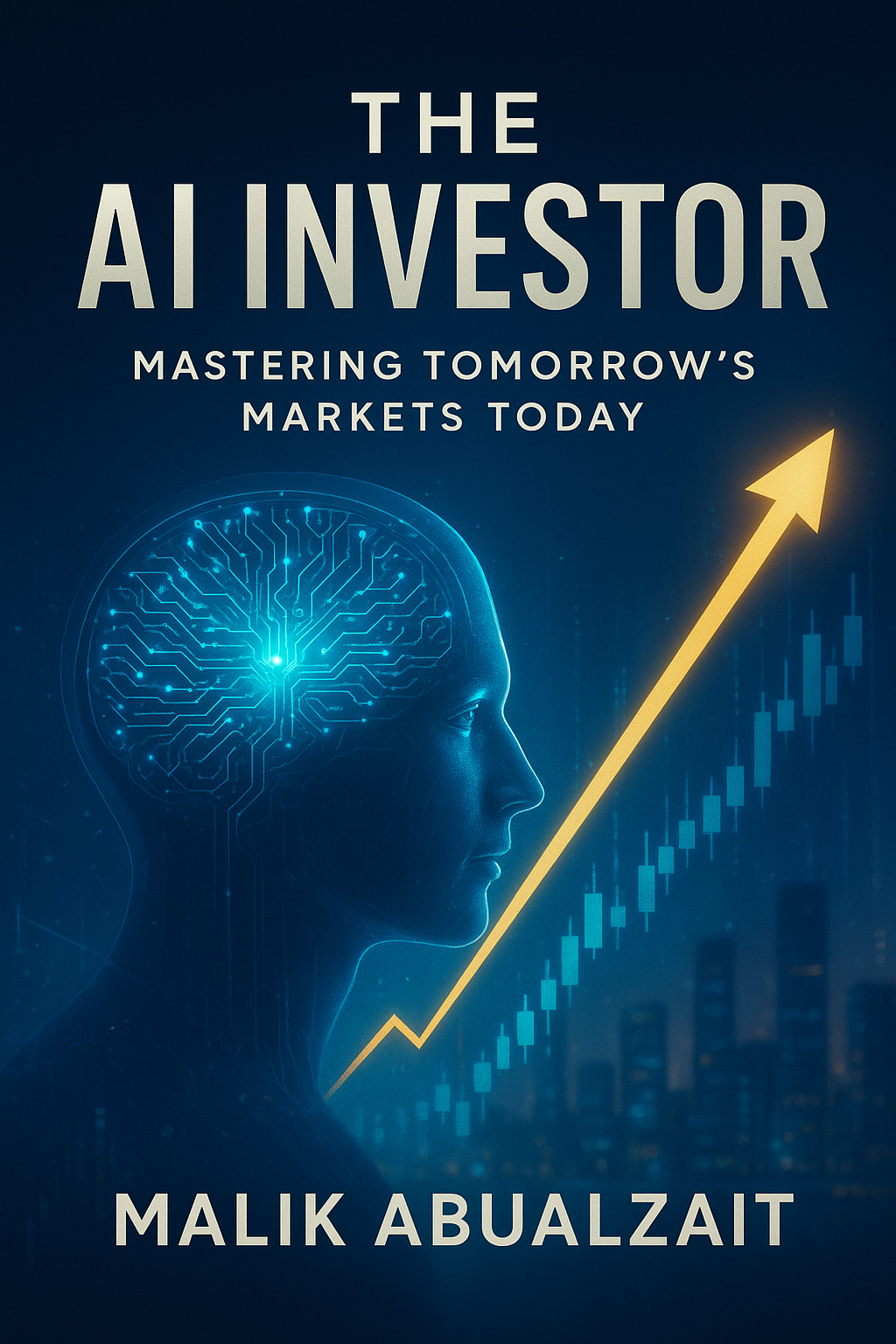
As Malik Abualzait points out in his comprehensive guide, _The AI Investor: Mastering Tomorrow's Markets Today_, this shift is not just a trend but a fundamental transformation of the investment landscape. For a deep dive into this topic, see Chapter 1 in Malik Abualzait's book available on Amazon, which provides a thorough exploration of the key drivers and benefits of AI-driven investing.
The Rise of Algorithmic Trading
One of the most significant applications of AI in investing is algorithmic trading. By leveraging machine learning algorithms, traders can analyze vast amounts of data, identify patterns, and make trades with unprecedented speed and accuracy. This has led to the creation of sophisticated trading systems that can adapt to changing market conditions.
For instance, a study cited by Abualzait in his book highlights how AI-powered trading strategies outperformed human counterparts in several key areas, including risk management and returns on investment (ROI). By automating routine tasks and leveraging machine learning capabilities, traders can now focus on higher-level decision-making, leading to more effective investment outcomes.
The Benefits of Quantitative Finance
Quantitative finance is another critical aspect of AI-driven investing. This approach uses mathematical models to analyze and understand market dynamics, allowing for more precise predictions and informed decisions. By leveraging advanced statistical techniques and machine learning algorithms, quantitative analysts can uncover hidden patterns in market data, which can be used to develop successful investment strategies.
As Abualzait emphasizes, the integration of AI into investing has made it possible to access cutting-edge financial research and tools that were previously only available to a select few. With AI-powered platforms, individual investors can now benefit from advanced quantitative analysis, risk management techniques, and data-driven insights that were once reserved for institutional investors.
Key Challenges and Opportunities
While the benefits of AI in investing are undeniable, there are also several challenges to navigate successfully. These include:
1. Data quality and availability: AI algorithms require high-quality, timely data to produce accurate predictions.
2. Interpretability and transparency: As AI models become increasingly complex, it can be challenging to understand their decision-making processes.
3. Risk management: The integration of AI into investing introduces new risks, such as model risk, which must be carefully managed.
To overcome these challenges, investors should focus on developing a comprehensive understanding of AI-driven strategies and tools. For this purpose, Abualzait's book provides an in-depth exploration of the key concepts and techniques required to succeed in the AI revolution.
Practical Examples and Use Cases
The integration of AI into investing is already being applied in various industries and asset classes. Some examples include:
1. Robo-advisors: Online platforms that use AI to provide personalized investment advice and automate portfolio management.
2. High-frequency trading: The use of AI-powered trading systems to execute trades at extremely high speeds, often in fractions of a second.
3. Predictive maintenance: AI algorithms are being used to predict equipment failures and optimize maintenance schedules, reducing downtime and increasing efficiency.
Key Takeaways
1. AI is transforming the investment landscape, making precision and predictability accessible to everyone.
2. Algorithmic trading and quantitative finance are critical applications of AI in investing, enabling traders and analysts to make more informed decisions.
3. To succeed in the AI revolution, investors must develop a comprehensive understanding of AI-driven strategies and tools.
Conclusion
The AI revolution in investing is here to stay, offering unprecedented opportunities for precision and predictability. As Abualzait emphasizes in his book, _The AI Investor: Mastering Tomorrow's Markets Today_, this transformation requires a deep understanding of AI-driven strategies and tools. To master the AI revolution in investing, get your copy of 'The AI Investor: Mastering Tomorrow's Markets Today' by Malik Abualzait on Amazon.
By embracing AI-driven investing, individuals can gain a competitive edge in the markets, making more informed decisions with confidence. Whether you're an experienced investor or just starting out, this new era of precision is within reach.
By Malik Abualzait