
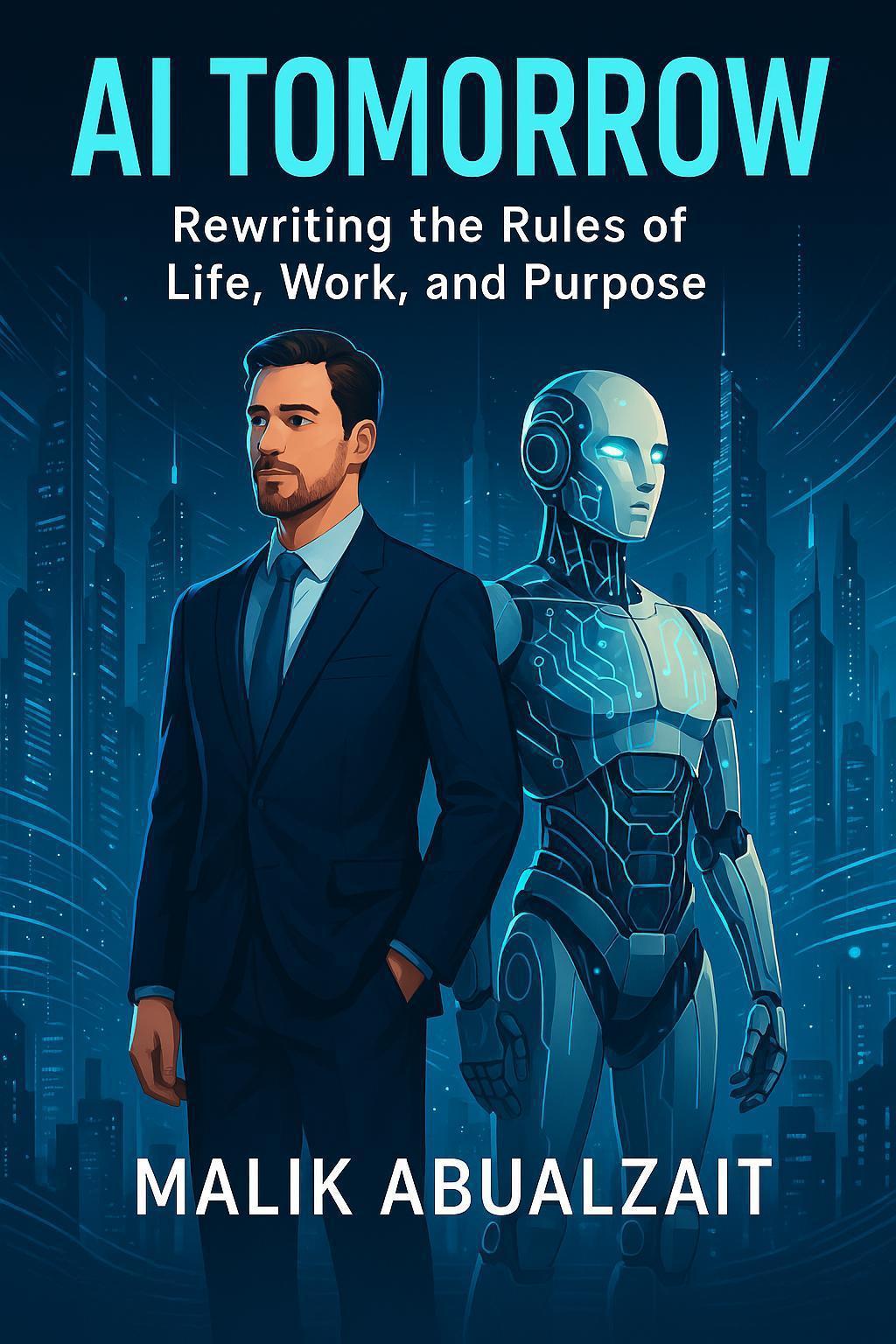
Unleashing Sparks of Intelligence: The Dawn of Artificial Intelligence
As we navigate the complexities of the modern world, one question resonates across industries and disciplines: what lies at the heart of artificial intelligence (AI)? In his groundbreaking book "AI Tomorrow: Rewriting the Rules of Life, Work and Purpose," Malik Abualzait embarks on a fascinating journey to unravel the enigma. Join us as we delve into the early sparks that ignited this revolutionary technology.
For centuries, humans have been fascinated by the idea of creating intelligent machines. From ancient myths about automatons to Alan Turing's seminal question in 1950, "Can machines think?" (1), AI has evolved from a distant dream to a tangible reality. Today, we're at the cusp of a new era where AI is transforming industries, jobs, and our very understanding of intelligence.
The Birth of Artificial Intelligence
In Chapter 1 of "AI Tomorrow: Rewriting the Rules of Life, Work and Purpose," Abualzait takes us on an intellectual journey through the history of AI. We learn about the pivotal moment in 1956 when John McCarthy coined the term "artificial intelligence" at the Dartmouth Conference (2). This marked the beginning of a new era in science, where experts from various fields converged to explore the possibilities and challenges of creating intelligent machines.
The Evolution of Machine Learning
One significant milestone in AI's development was the introduction of machine learning. In contrast to traditional programming, which relies on explicit rules and logic, machine learning enables computers to learn from data without being explicitly programmed. This paradigm shift has empowered AI systems to adapt, improve, and innovate at an unprecedented pace.
A prime example of this is Google's AlphaGo algorithm, developed in collaboration with the DeepMind team (3). By leveraging machine learning, AlphaGo successfully defeated a human world champion in Go, a game considered one of the most complex in the world. This achievement marked a turning point in AI's capabilities and demonstrated its potential to surpass human intelligence in specific domains.
The Future of Work: Navigating the Impact of AI
As AI continues to advance, we're witnessing significant changes in the job market. Automation and AI-powered tools are increasingly taking over routine and repetitive tasks, freeing humans to focus on higher-value work that requires creativity, empathy, and complex problem-solving.
However, this transformation also raises questions about the future of employment and education. In "AI Tomorrow," Abualzait offers insightful perspectives on how we can adapt to these changes and cultivate a workforce equipped with the skills necessary for success in an AI-driven economy.
Practical Applications: Unleashing AI's Potential
From improving healthcare outcomes through personalized medicine to enhancing customer experiences with chatbots, AI is already making significant impacts across various sectors. By embracing this technology, businesses can:
- Enhance operational efficiency and reduce costs
- Foster innovation through data-driven decision-making
- Develop new products and services tailored to individual needs
Key Takeaways:
1. AI is not just about technology; it's about transforming human experience.
2. Machine learning has been instrumental in accelerating AI's progress, enabling systems to adapt and improve at an unprecedented pace.
3. The future of work will require us to cultivate skills that complement AI's capabilities, such as creativity, empathy, and complex problem-solving.
In conclusion, the journey of AI is a rich tapestry woven from threads of human ingenuity, mathematical genius, and technological innovation. As we continue on this path, it's essential to understand the history, evolution, and potential implications of this transformative force. To master the history and evolution of AI, get your copy of "AI Tomorrow: Rewriting the Rules of Life, Work and Purpose" by Malik Abualzait on Amazon (5).
References:
(1) Alan Turing, "Computing Machinery and Intelligence," 1950.
(2) John McCarthy et al., "Proposal for the Dartmouth Summer Research Project on Artificial Intelligence," 1956.
(3) David Silver et al., "Mastering the Game of Go with Deep Neural Networks and Tree Search," 2016.
(4) See Chapter 1 in Malik Abualzait's comprehensive guide available on Amazon: https://www.amazon.com/dp/B0FXV2LB56
(5) To master the history and evolution of AI, get your copy of "AI Tomorrow: Rewriting the Rules of Life, Work and Purpose" by Malik Abualzait on Amazon: https://www.amazon.com/dp/B0FXV2LB56
By Malik Abualzait