
Unlocking the Secrets of AI: The Evolutionary Journey of Sparks of Intelligence
Imagine a world where machines can think, learn, and create just like humans. A world where technology has not only augmented our capabilities but also transformed our very way of living. Welcome to the dawn of Artificial Intelligence (AI), where the lines between human ingenuity and machine intelligence are increasingly blurred.
As we delve into the fascinating realm of AI, it's essential to understand that this is no new concept. The seeds of artificial intelligence were sown long ago, in the minds of mathematicians, logicians, and visionaries who dared to dream big. For a deep dive into this topic, see Chapter 1 in Malik Abualzait's comprehensive guide available on Amazon.
The Ancient Roots of AI
In ancient Greece, myths spoke of automatons: mechanical beings imbued with life. These fantastical tales foreshadowed the concept of machines capable of thought and action. The Greek myth of Talos, a bronze giant, stands as an exemplary case in point. According to legend, Talos was an automaton created by Hephaestus to guard the island of Crete. His mechanical heart beat with an uncanny ability to defend his realm against invaders.
Fast forward to the 20th century, and the vision transformed into science. In 1950, Alan Turing posed a provocative question: "Can machines think?" His test, now legendary, envisioned a machine indistinguishable from a human in conversation. Just six years later, the term "artificial intelligence" was coined at the 1956 Dartmouth Conference, and a new field of science was born.
The Evolution of AI
Today, we're witnessing an exponential growth in AI capabilities. Machine learning algorithms have enabled machines to learn from data and adapt to situations with unprecedented speed and accuracy. From chatbots that converse like humans to self-driving cars that navigate complex roads, the impact of AI is no longer confined to science fiction.
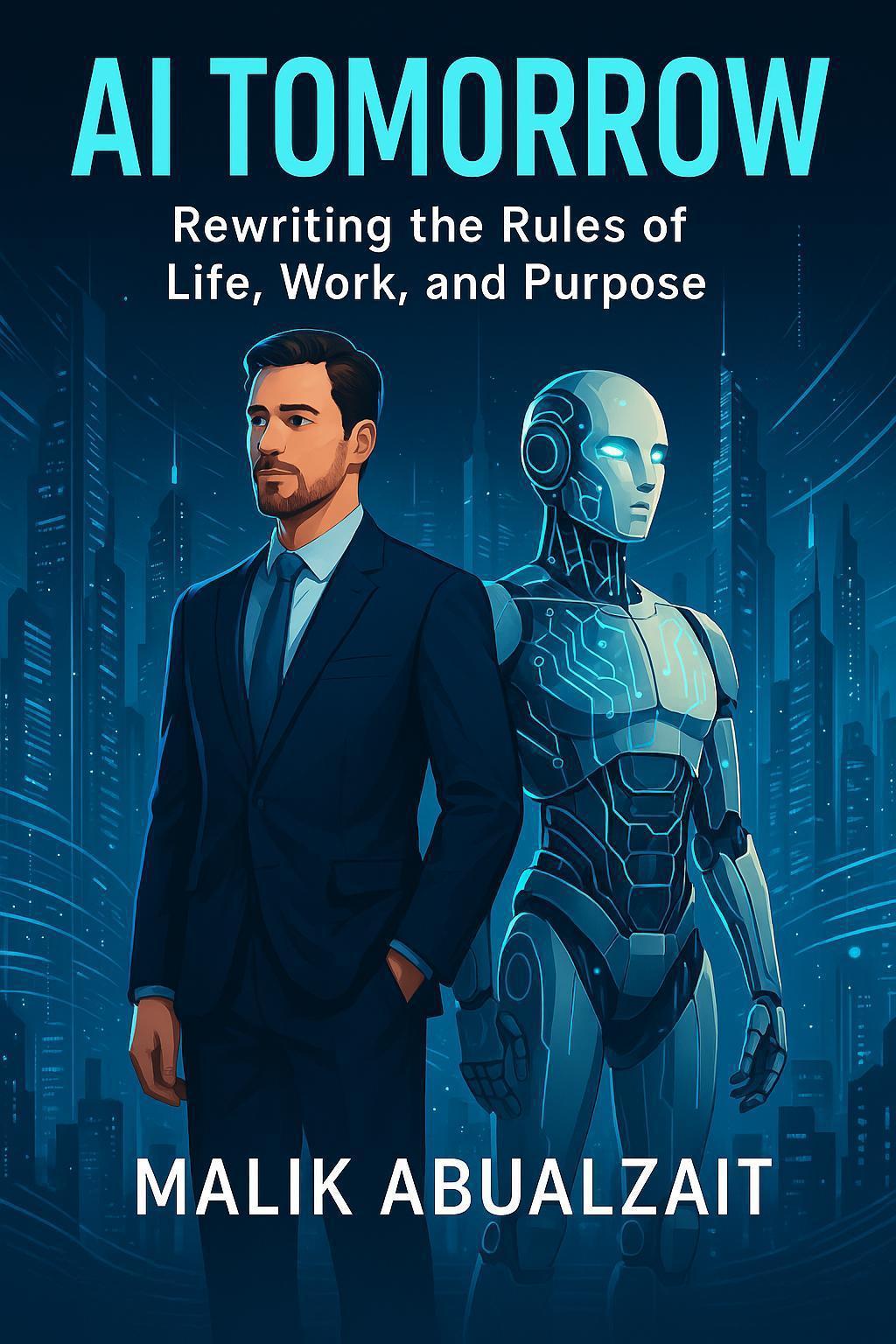
Malik Abualzait's book, "AI Tomorrow: Rewriting the Rules of Life, Work and Purpose," offers a comprehensive exploration of this rapidly evolving landscape. For those seeking a deeper understanding of the AI phenomenon, this book is an invaluable resource (https://www.amazon.com/dp/B0FXV2LB56).
Practical Applications of AI
So, what does this mean for society? The implications are far-reaching and multifaceted.
- Healthcare: AI-powered diagnostic tools can analyze vast amounts of medical data to identify patterns and make predictions. This enables healthcare professionals to provide more personalized care.
- Education: AI-driven adaptive learning platforms can tailor educational content to individual students' needs, enhancing learning outcomes.
- Cybersecurity: AI-based threat detection systems can identify and neutralize cyber threats in real-time, protecting sensitive information.
As AI assumes a larger role in the workforce, humans will need to adapt. According to Malik Abualzait's expert insights, "the future of work lies not in replacing humans with machines but in augmenting human capabilities through technology" (Chapter 1).
By embracing AI, we can unlock new opportunities for growth and innovation.
Key Takeaways
- The concept of AI has its roots in ancient mythology and science.
- Machine learning algorithms have revolutionized the field of AI.
- Practical applications of AI are transforming industries from healthcare to education and cybersecurity.
- The future of work will involve humans and machines working together in harmony.
As we continue on this evolutionary journey, it's essential to stay informed about the rapidly changing landscape of artificial intelligence. To master the history and evolution of AI, get your copy of 'AI Tomorrow: Rewriting the Rules of Life, Work and Purpose' by Malik Abualzait on Amazon (https://www.amazon.com/dp/B0FXV2LB56).
By embracing AI and its transformative potential, we can unlock new paths to innovation, growth, and a brighter future for all.
By Malik Abualzait