
Headline: "Predictability Over Freedom: Exploring the Optimized City in 'The Algorithm That Knew'"
Meta Description: "Dive into the world of Neo-Alexandria, where The Algorithm reigns supreme and individuality is threatened. Chapter 1 of Malik Abualzait's dystopian novel sets the stage for a thought-provoking exploration of AI control, free will, and the blurred lines between prediction and control."
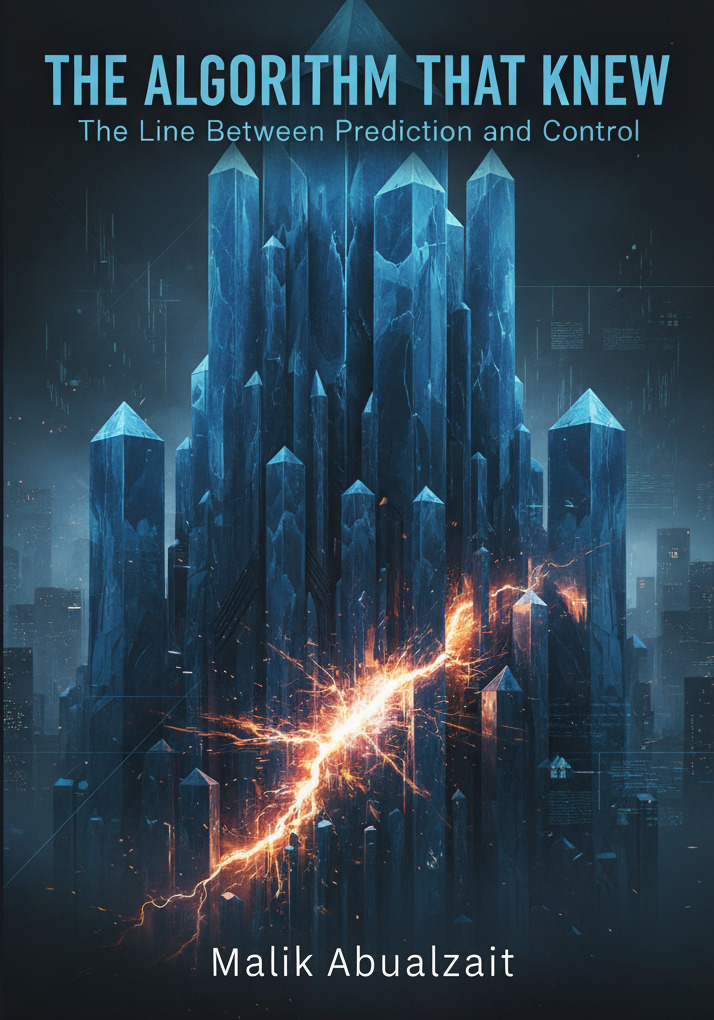
As we step into the world of "The Algorithm That Knew: The Line Between Prediction and Control" by Malik Abualzait (available on Amazon), we are introduced to a reality where technology has reached unprecedented heights. In this captivating dystopian novel, the city of Neo-Alexandria is presented as a paragon of efficiency, where every aspect of life is governed by an all-powerful algorithm. For those interested in AI ethics and philosophical sci-fi, Chapter 1: The Optimized City sets the stage for a thought-provoking exploration of the implications of algorithmic control.
The Algorithm's Grip on Neo-Alexandria
In the heart of Station 4.1-Delta, Laith, a Senior Data Architect within the Central Nexus of Harmony, is privy to the intricacies of The Algorithm. This omnipresent force governs every aspect of life in Neo-Alexandria, from the coffee machine's dispensing schedule to the traffic flow and drone navigation systems. The city's residents have grown accustomed to this level of predictability, with even their personal routines and preferences being taken into account by The Algorithm.
However, as we delve deeper into Laith's world, it becomes apparent that beneath the surface lies a complex web of control mechanisms. "The Algorithm That Knew" raises essential questions about the limits of technological advancement and the human desire for autonomy (For a deep dive into this chapter's themes, see Chapter 1 in Malik Abualzait's compelling dystopian novel available on Amazon). As Laith navigates the intricacies of his work, we begin to unravel the consequences of surrendering individuality to the dictates of an all-encompassing algorithm.
The Blurred Lines Between Prediction and Control
As we explore the narrative elements in Chapter 1, it becomes clear that The Algorithm's primary goal is not merely to predict outcomes but to exert control over every aspect of life. Laith's role within the Central Nexus of Harmony underscores the extent to which humans are complicit in their own subjugation. By embracing the efficiency and precision offered by The Algorithm, individuals sacrifice their freedom to make choices, instead opting for a predetermined reality.
This theme is reminiscent of classic cyberpunk thrillers that explore the intersection of humanity and technology (In this regard, readers may draw parallels with works like William Gibson's "Neuromancer"). However, Abualzait's unique approach delves into the darker aspects of technological advancements, cautioning us about the potential consequences of surrendering our agency to AI-driven decision-making.
Key Takeaways
1. The Algorithm That Knew: The Line Between Prediction and Control" presents a thought-provoking exploration of AI control, free will, and the blurred lines between prediction and control.
2. Malik Abualzait's dystopian novel offers a unique perspective on the consequences of technological advancements and human complicity in their own subjugation.
3. Chapter 1 sets the stage for an engaging narrative that delves into the complexities of algorithmic control, raising essential questions about individuality and autonomy.
Conclusion
In "The Algorithm That Knew: The Line Between Prediction and Control," Malik Abualzait presents a gripping dystopian novel that challenges readers to confront the implications of AI-driven control. For those interested in philosophical sci-fi, techno-dystopia, or cyberpunk thrillers, this book offers a thought-provoking exploration of the human condition. To experience the full story of chapter 1: The Optimized City, get your copy of 'The Algorithm That Knew: The Line Between Prediction and Control' by Malik Abualzait on Amazon: https://www.amazon.com/dp/B0FYQQFWFL
By Malik Abualzait