
The AI Revolution in Investing: A New Era of Precision
In a world where technological advancements are transforming industries at an unprecedented rate, one domain has remained somewhat resistant – investing. Until now. The integration of Artificial Intelligence (AI) into investment decision-making has revolutionized the landscape, rendering it more accessible, efficient, and even fun for both individual investors and institutional professionals alike.
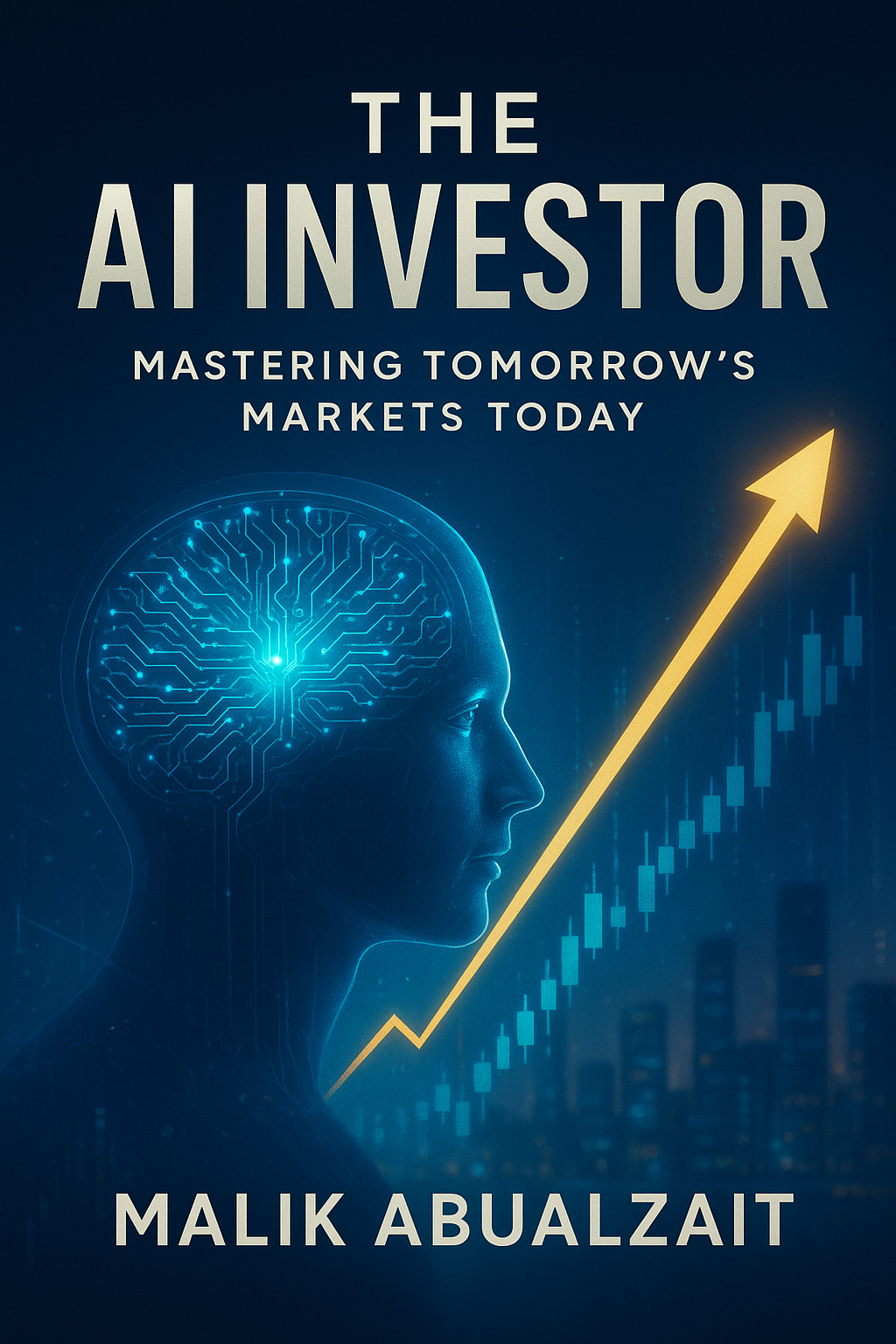
For a deep dive into this topic, see Chapter 1 in Malik Abualzait's comprehensive guide available on Amazon, "The AI Investor: Mastering Tomorrow's Markets Today" (https://www.amazon.com/dp/B0FY46BRDD). This insightful book provides an exhaustive exploration of how AI is transforming investing and offers practical advice for navigating this new era.
Understanding the AI Revolution in Investing
Artificial Intelligence, a subset of machine learning, has been quietly making its presence felt in various sectors. In finance, it has revolutionized investment strategies, offering unparalleled precision and scalability. The benefits are multifaceted:
- Enhanced Accuracy: AI-driven algorithms process vast amounts of data in real-time, identifying patterns that human analysts might miss.
- Real-Time Decision Making: Unlike traditional methods where decisions are made on historical data, AI allows for instant response to market fluctuations.
- Scalability: With the power of automation, AI can handle vast portfolios with ease, reducing operational costs and increasing returns.
- Data Quality and Quantity: The success of AI in investing heavily relies on high-quality, diverse data sets.
- Bias Elimination: Ensuring that algorithms don't perpetuate biases is crucial to fair decision-making.
- Interpretability: Understanding how AI arrives at its decisions is essential for trust and adaptability.
AI's impact on investing isn't merely theoretical. Practical applications are numerous:
1. Algorithmic Trading: Using machine learning algorithms to automatically execute trades based on predefined rules can significantly reduce human error.
2. Portfolio Optimization: AI-driven tools can continuously rebalance portfolios, ensuring optimal diversification and risk management.
3. Predictive Analytics: By leveraging large datasets, AI can predict market trends with high accuracy, enabling investors to make informed decisions.
For a more in-depth exploration of these topics, including real-world examples and strategies for implementation, refer to Chapter 1 of "The AI Investor: Mastering Tomorrow's Markets Today" by Malik Abualzait (https://www.amazon.com/dp/B0FY46BRDD).
Key Takeaways
- AI is not a replacement: It's an enhancement tool that can significantly improve the efficiency and effectiveness of investment strategies.
- Embracing AI requires education: Understanding its capabilities, limitations, and ethical considerations is crucial for successful integration.
In conclusion, the AI revolution in investing has ushered in a new era of precision and efficiency. By understanding its drivers, benefits, and challenges, investors can harness the power of AI to make more informed decisions, achieve better returns, and stay ahead of the curve. Whether you're an individual investor or a financial professional, this is your chance to be at the forefront of innovation.
Meta Description: Discover how Artificial Intelligence (AI) is transforming investing in "The AI Investor: Mastering Tomorrow's Markets Today" by Malik Abualzait. Learn about its benefits and challenges, and get equipped with the knowledge needed to succeed in the new era of precision investing.
By Malik Abualzait