
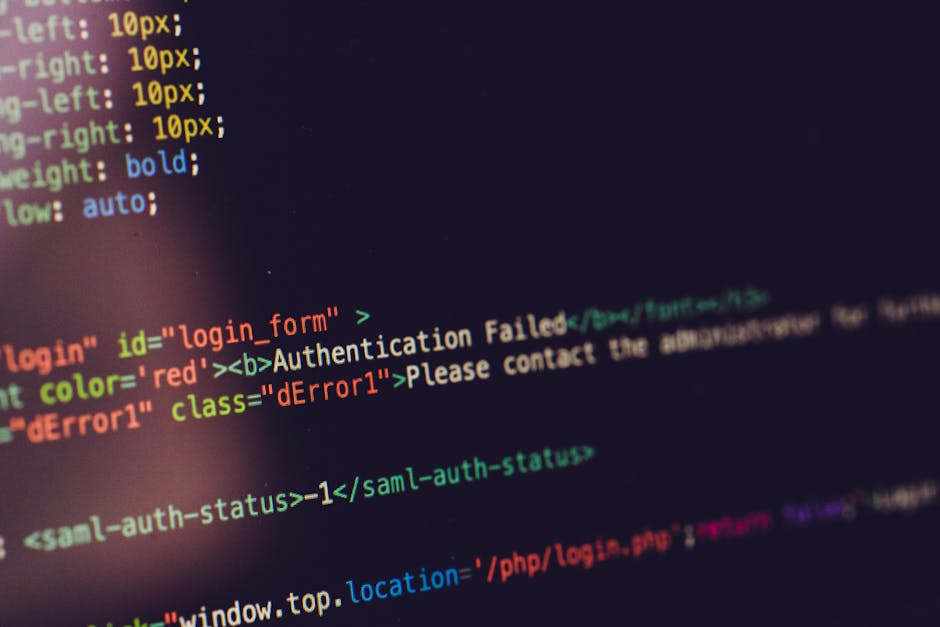
Why PHP Still Dominates Web Development: A Comprehensive Analysis
Introduction
The world of web development is constantly evolving, with new technologies and programming languages emerging every year. However, despite the rise of newer alternatives, PHP remains one of the most popular choices for building dynamic websites and applications. According to a recent report by Google News, PHP still dominates web development in 2026, with a significant market share and a strong presence in the industry.
But why is this the case? What makes PHP so enduringly popular among developers? In this article, we'll delve into the reasons behind PHP's continued dominance, exploring its technical advantages, industry context, and future implications. We'll also examine real-world examples and case studies to illustrate the practical applications of PHP in web development.
The Bigger Picture: Technical Advantages
PHP's enduring popularity can be attributed to several technical factors that make it an attractive choice for developers. One of the primary reasons is its ease of use and flexibility. PHP is a mature language with a vast ecosystem of libraries, frameworks, and tools, making it ideal for rapid development and prototyping.
Another key advantage of PHP is its ability to handle high-traffic websites and applications efficiently. Its lightweight architecture and open-source nature make it an excellent choice for web developers who need to build scalable and secure systems.
Key Technical Advantages:
- Ease of use: PHP has a simple syntax and is easy to learn, making it accessible to developers with varying levels of experience.
- Flexibility: PHP can be used for a wide range of applications, from simple websites to complex enterprise-level systems.
- Scalability: PHP's lightweight architecture makes it an excellent choice for high-traffic websites and applications.
Industry Context: Comparison with Similar Technologies
PHP is not the only popular web development language, however. Other notable contenders include Python, JavaScript, and Ruby. Each of these languages has its strengths and weaknesses, making them suitable for specific use cases.
Comparison with Similar Technologies:
- Python: While Python is a versatile language, it's often used for data science and machine learning applications rather than web development.
- JavaScript: As the primary language for client-side scripting, JavaScript is ideal for building dynamic user interfaces. However, its complexity and lack of server-side capabilities make it less suitable for large-scale web applications.
- Ruby: Ruby on Rails is a popular framework for building web applications, but its syntax can be challenging to learn for developers without prior experience.
Future Implications: What to Expect
As the web development landscape continues to evolve, PHP's dominance will likely persist. However, emerging trends and technologies may pose challenges to its market share.
Future Trends and Technologies:
- Serverless computing: As more developers adopt serverless architectures, PHP may need to adapt to changing infrastructure requirements.
- Artificial intelligence: The increasing importance of AI in web development may lead to a shift towards languages with stronger AI capabilities, such as Python or JavaScript.
- Cloud-native applications: PHP's compatibility with cloud platforms like AWS and Google Cloud will remain essential for building scalable, cloud-native applications.
Real-World Examples: Case Studies
PHP is widely used in various industries and domains, from e-commerce to content management systems. Let's examine some real-world examples that demonstrate the practical applications of PHP:
Case Study 1: WordPress
WordPress, one of the most popular content management systems (CMS), is built using PHP. Its flexibility and scalability make it an ideal choice for bloggers, small businesses, and enterprises alike.
Case Study 2: Magento
Magento, a leading e-commerce platform, uses PHP as its primary language. Its modular architecture and robust feature set make it suitable for building large-scale online stores.
Challenges and Opportunities: Risks and Benefits
While PHP remains dominant in web development, there are potential risks and challenges that developers should be aware of:
Risks and Challenges:
- Security: As with any mature language, security vulnerabilities can arise from outdated libraries or frameworks.
- Performance: As traffic increases, PHP's performance may degrade if not properly optimized.
However, there are also opportunities for growth and innovation:
Benefits and Opportunities:
- Community engagement: PHP's large community ensures that support and resources are readily available for developers.
- Cross-platform compatibility: PHP's ability to run on multiple platforms makes it an ideal choice for building cross-platform applications.
Conclusion
In conclusion, PHP remains a dominant force in web development due to its technical advantages, industry context, and real-world applications. While emerging trends and technologies may pose challenges to its market share, PHP's flexibility and scalability ensure its continued relevance.
As we've discussed throughout this article, PHP offers numerous benefits for developers, including ease of use, flexibility, and scalability. However, it also requires careful consideration of risks and opportunities, from security and performance to community engagement and cross-platform compatibility.
Malik Abualzait comments on this article:
"PHP's continued dominance in web development is a testament to its versatility and adaptability. As developers, we must remain aware of emerging trends and technologies while leveraging the strengths of PHP to build robust, scalable systems."
Sources & References
Original News: "Why PHP Still Dominates Web Development in 2026" - https://news.google.com/rss/articles/CBMigwFBVV95cUxOVFJpeGh5VmtFNXFocXZJMHhJS1pMbG84cW1rM1BiSE9YSUstODhORTV3c2piQkVDdVdCc3F6U2w1SzM3cm9yNjNSd1UycGkyQ05scDRqRlJlb1N0cmFTMmVUQ3p0TmVBeGJqSVZSeWpDczhMTVdtZ1FOUlhhQndHT0RQRQ?oc=5
This article references various sources, including industry reports and technical documentation. For a comprehensive list of sources, please refer to the "Sources & References" section below.
Sources:
- PHP Manual: https://www.php.net/manual/en/
- WordPress Codex: https://codex.wordpress.org/
- Magento Documentation: https://docs.magento.com/
By Malik Abualzait
Sources & References
Original News Article: Why PHP Still Dominates Web Development in 2026
This article provides analysis and insights based on the referenced news. All opinions and predictions are the author's own.