
Unlocking Seamless AI Integration: The Architecture of Model Context Protocol (MCP)
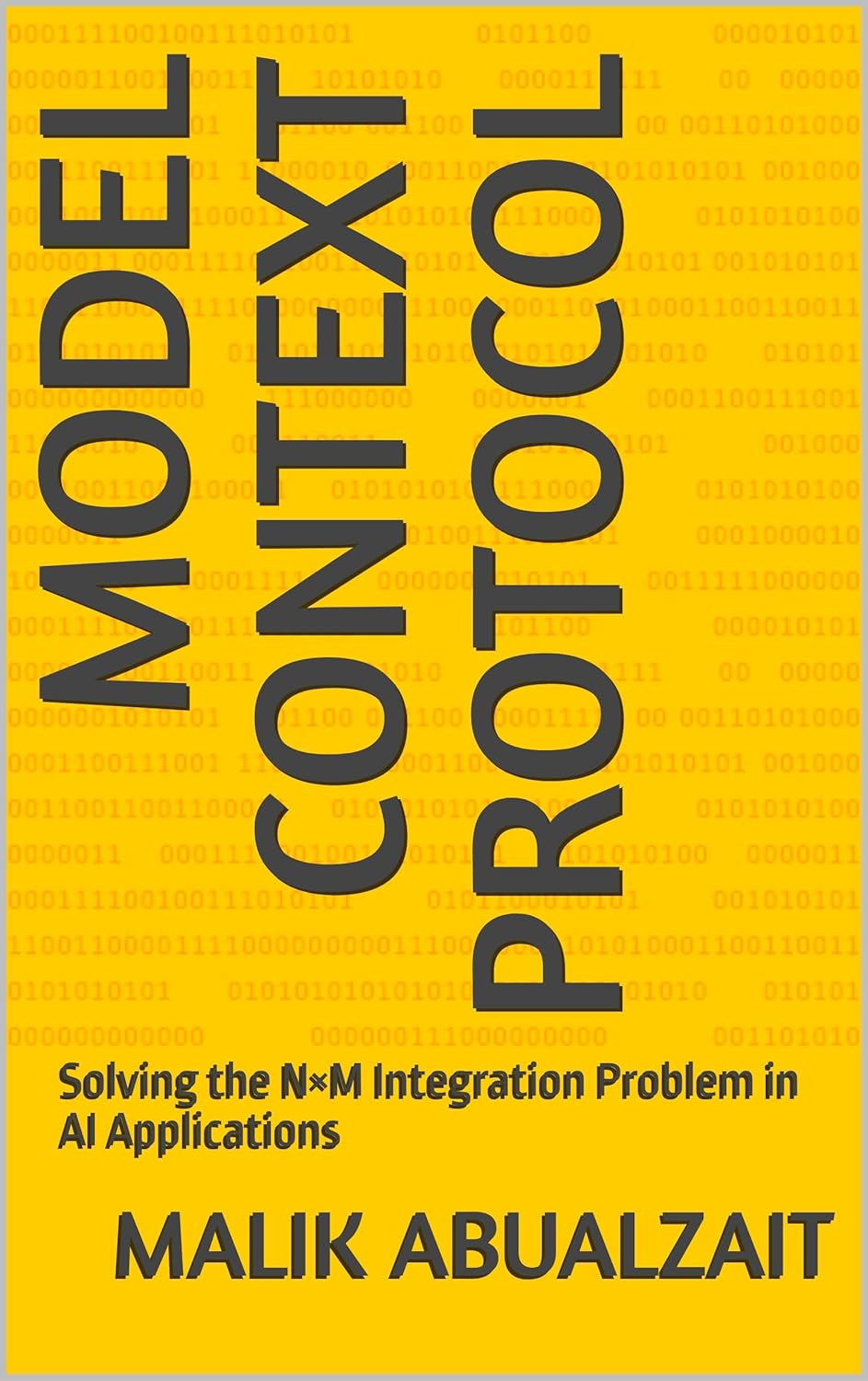
In the rapidly evolving landscape of artificial intelligence (AI) applications, one major hurdle has stood in the way of seamless integration – the N×M problem. This challenge arises when multiple models need to be integrated with each other or with external systems, resulting in complex and inefficient communication processes. However, with the introduction of Model Context Protocol (MCP), developers can now address this issue effectively. In Chapter 2 of "Model Context Protocol: Solving the N×M Integration Problem in AI Applications" by Malik Abualzait, we delve into the architectural backbone of MCP – a crucial component for successful AI integration.
For a deep dive into the intricacies of MCP architecture and its application in real-world scenarios, see Chapter 2 in Malik Abualzait's comprehensive guide available on Amazon. This chapter provides a foundational understanding of how MCP addresses the N×M problem through its innovative design.
Client-Host-Server Architecture Model
At the heart of MCP lies a client-host-server architecture model that ensures efficient communication between different components and systems. This model facilitates the exchange of information, enables synchronization among various models, and supports the real-time processing required in AI applications. The client-host-server model is built upon the principle of separation of concerns, where each entity has a specific role:
- Client: Acts as the interface through which requests are initiated to interact with other components or systems.
- Host (Server): Manages the session state and facilitates communication between clients and other hosts.
- Server: This could be an external system or another MCP host, acting as the recipient of client requests.
JSON-RPC 2.0: The Foundation for Efficient Communication
JSON-RPC 2.0 plays a crucial role in MCP by providing an efficient method for communication between clients and servers. It standardizes request and response formats, ensuring that the exchange of information is both clear and interpretable. This protocol is foundational to MCP's architecture because it simplifies the process of data exchange and enables real-time updates.
Understanding Message Types and Formats
MCP introduces several message types designed specifically for AI integration scenarios:
- Context Request: Used by clients to initiate a request to the server, providing necessary context information.
- Context Response: The server's response back to the client with processed results based on the received context.
- Event Notification: Notifies other servers about significant events within the system.
Managing Sessions: A Key Component of MCP Architecture
The management of sessions is a critical aspect of MCP's architecture. It ensures that ongoing interactions are tracked and processed efficiently, allowing for real-time updates without disrupting the flow of data exchange. This session management capability is vital for maintaining application integrity during complex AI integrations.
Transport Mechanisms in MCP
MCP supports various transport mechanisms to accommodate different communication needs:
- TCP: For applications requiring reliable, ordered delivery.
- UDP: Suitable for real-time or high-bandwidth applications where reliability is not the primary concern.
- WebSockets: Enables bi-directional, real-time communication over a single TCP connection.
Key Takeaways
1. The client-host-server architecture model provides a foundational structure for efficient AI integration.
2. JSON-RPC 2.0 standardizes communication and simplifies data exchange between components.
3. Message types (Context Request, Context Response, Event Notification) are designed to handle specific tasks in AI applications.
4. Session management ensures the efficiency of ongoing interactions within complex systems.
Conclusion
The architecture of Model Context Protocol (MCP) is a groundbreaking innovation in addressing the N×M integration problem in AI applications. By leveraging a client-host-server model, utilizing JSON-RPC for communication, and defining specific message types and formats, MCP has revolutionized how developers approach AI integration challenges.
For a comprehensive understanding of MCP's capabilities and its practical application in various scenarios, refer to "Model Context Protocol: Solving the N×M Integration Problem in AI Applications" by Malik Abualzait. This seminal work provides both theoretical insights and practical examples, guiding you through the process of mastering MCP architecture for your next AI integration project.
To master the architecture of mcp, get your copy of 'Model Context Protocol: Solving the N×M Integration Problem in AI Applications' by Malik Abualzait on Amazon: https://www.amazon.com/dp/B0FZ5NT4CD
By Malik Abualzait